Elevate Your Projects with Modern Digital Paper Design
When you're building a brand, crafting a wedding invitation, or designing a website, the foundation matters. You can have the most elegant typography or the most compelling copy, but if the background feels generic, the entire project can fall flat. This is where the right Digital Paper Design Print Templates become not just a nice-to-have, but an essential part of your creative toolkit. We're talking about more than just a pattern; we're talking about a textured, modern aesthetic that brings depth and professionalism to any visual.
The Anatomy of a Versatile Design Asset
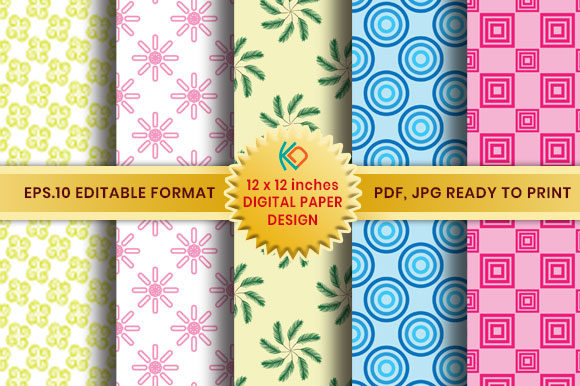
This specific set of five digital papers is crafted with a distinctly modern, geometric sensibility. The patterns avoid overly busy or distracting elements, focusing instead on clean lines and balanced compositions. The personality is one of quiet confidence—professional enough for a corporate report background, yet stylish enough for a high-end scrapbook layout. The overall appeal lies in its versatility; these are not niche patterns that pigeonhole your design, but rather foundational textures that adapt to your vision. The style leans into contemporary trends, making it a valuable addition to your library of design assets for years to come.
The true strength of this digital paper pack lies in its technical execution. Each design is delivered as a high-resolution 12x12 inch (30.5x30.5 cm) file, ensuring crisp clarity even at 300 dpi for professional printing. But the package goes far beyond simple JPGs. You receive the files in JPG, PNG (with transparent backgrounds for layering), PDF, and crucially, EPS Vector Graphics. This vector format in EPS 10 is a game-changer for designers. It means you can scale the patterns to any size—from a small social media icon to a massive trade show banner—without a single pixel of quality loss. This level of flexibility is what separates a standard background from a true premium font and asset companion.
Practical Applications: From Branding to Wedding Props
Understanding where to deploy these assets is key to maximizing their value. For entrepreneurs and small business owners, these patterns can form the subtle backdrop of a brand identity. Imagine using one of the geometric designs behind your logo on a business card, or as the textured background for your website's hero section. It adds a layer of tactile sophistication that flat, solid colors simply cannot match. For packaging design, a subtle digital paper can elevate a product box or sleeve, making it feel more premium and considered.
Content creators and marketers will find endless uses in the digital realm. These patterns are perfect for creating cohesive social media graphics. Use them as the background for quote cards, promotional announcements, or Instagram story templates. The included PNG files with transparent backgrounds are particularly useful here, allowing you to layer text and other graphics seamlessly. For bloggers and publishers, these papers can enhance editorial design—think textured backgrounds for e-book covers, newsletter headers, or featured images that need to stand out in a crowded feed.
For the crafters and hobbyists in the audience, the applications are deeply personal and creative. These are ideal for modern scrapbooking, providing a stylish canvas for photos and journaling. The high-quality print files make them perfect for creating custom wedding props, stationery, party invitations, and DIY decor. The ability to print them at home or through a professional service at full resolution ensures your handmade projects look polished and intentional.
Integrating Digital Papers into Your Design Workflow
Simply having the files isn't enough; knowing how to integrate them effectively is what creates impact. When choosing which of the five papers to use, consider the mood of your project. A more intricate pattern might work best as a small accent, while a simpler, larger-scale pattern can handle being a full-page background. Always test the background with your foreground elements—your typeface, images, and logos. Ensure there is enough contrast for readability. A busy pattern behind a script font can become illegible; pairing it with a clean sans serif font often yields better results.
This brings us to the critical concept of font pairing. Your background texture should support, not compete with, your typography. If you're using a bold display font for a headline, a more subdued digital paper allows the text to remain the star. Conversely, if your text is minimal, a more dynamic pattern can add the necessary visual interest. The key is balance. Use the digital paper to establish hierarchy; a textured background can push certain elements forward while receding others, guiding the viewer's eye exactly where you want it.
Before finalizing any project, step back and evaluate the overall cohesion. Does the digital paper enhance the professionalism of the piece? Does it align with the personality of the brand or event? Does it improve readability and visual hierarchy? When used thoughtfully, these assets don't just fill space—they contribute to audience engagement by creating a more immersive and aesthetically pleasing experience. They are a tool for visual consistency, allowing you to carry a specific texture and mood across multiple touchpoints, from a printed brochure to a digital ad, strengthening brand recognition and recall.
Ultimately, investing in a high-quality, versatile set of digital papers is an investment in your creative output. It provides a reliable foundation upon which you can build countless projects, ensuring each one starts with a professional, modern edge. Whether you're a designer seeking new textures, a marketer crafting compelling visuals, or a hobbyist bringing a personal project to life, having a resource like this Digital Paper Design pack at your fingertips empowers you to work more efficiently and with greater creative confidence. It’s the kind of practical, high-value asset that earns its place in your permanent toolkit.