Elevate Your Brand with Tshirt Label Tag Templates
The Power of a Professional Label
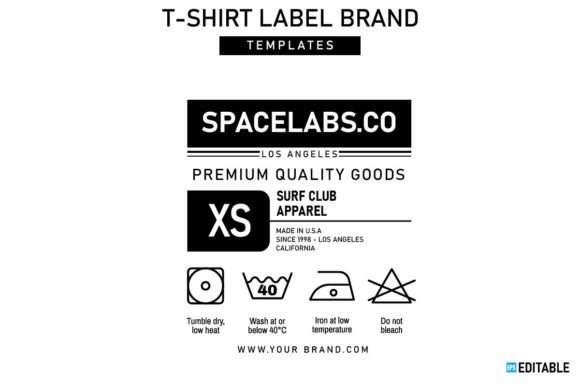
In the world of apparel, the details make the brand. A customer’s tactile experience with your product begins with the clothing label. It’s the first thing they feel, the source of care instructions, and a subtle but powerful piece of your brand identity. A generic, scratchy tag can undermine even the most stylish garment. Conversely, a well-designed label conveys quality, care, and professionalism. This is where having the right design assets becomes crucial. The Tshirt Label Tag Templates offer a solution that blends aesthetic appeal with practical utility, providing a foundational element for any clothing line seeking a polished, cohesive look.
These templates are not just static images. They are crafted as 100% vector files, specifically in EPS format. This is the industry standard for scalable graphics. What does this mean for you? It means the design is built on mathematical paths, not pixels. You can scale the label design from a tiny neck tag to a large hang tag or even a banner without any loss of quality. The lines remain crisp, and the colors stay true. This flexibility is essential for creating a consistent brand identity across all your physical touchpoints, from the product itself to marketing materials.
A Versatile Toolkit for Creative Professionals
The true value of a template like this lies in its editability. The files are designed to be opened and modified in any standard vector graphics software, such as Adobe Illustrator, Affinity Designer, or CorelDRAW. This transforms the template from a finished product into a creative starting point. You have complete control. Transform elements, adjust the layout, add your own logo or brand name, and recolor the entire design to match your palette. The 100% editable text is particularly important—you can instantly change the font, size, and wording to include your care instructions, fiber content, and country of origin, meeting both legal requirements and customer expectations.
Consider the applications beyond a simple t-shirt. These label designs can be adapted for hang tags on denim jackets, care labels for knitwear, or branded patches for hats. For a graphic designer or a small business owner, this adaptability is a significant time and cost saver. Instead of starting from scratch for each product or collection, you have a professional, aesthetic foundation that ensures visual consistency. This consistency is a cornerstone of strong brand identity, helping customers recognize and remember your products amidst a crowded market.
Integrating Templates into Your Workflow
Practical implementation is straightforward. Once you download the compressed ZIP file, you extract it to access your assets. You’ll receive the vector source file and a JPG preview for quick reference. The process involves opening the EPS file, making your customizations—this could be as simple as typing your brand name or as involved as restructuring the design to fit a unique label shape—and then exporting the file for your manufacturer. Most print shops will accept EPS or PDF files derived from these vectors.
When choosing and using these templates, think about your brand’s personality. Is it minimalist and modern? Look for templates with clean lines and ample white space. Is it rustic or artisanal? You might gravitate toward designs with textured elements or script-like typography. The key is to ensure the template’s style aligns with your overall brand strategy. Test how your chosen typeface pairs with the template’s existing elements. A strong font pairing can elevate the design, creating a clear hierarchy that guides the eye from the brand name to the essential information.
Ultimately, professional design assets like these Tshirt Label Tag Templates empower creators to produce high-quality work efficiently. They bridge the gap between a great idea and a market-ready product, ensuring that the first physical interaction a customer has with your brand is one of quality and intention. In a competitive landscape, investing in such details is not an expense—it’s a strategic investment in perception, recognition, and customer loyalty.